
“Next To Normal” Looks Grief In The Eye
Mental health may no longer be the taboo topic it was 10-20 years ago, but when Next To Normal made its 2008 off-Broadway and 2009 Broadway debut, the rock musical made waves in modern theater. It won three Tony Awards (Best Original Score, Best Orchestration, Best Performance by a Leading Actress in a Musical for Alice Ripley) and the Pulitzer Prize For Drama. It helped open the discussion of mental health in the theater scene, years before Every Brilliant Thing (2013) and Dear Evan Hansen (2015), two of the best mental health-themed theater productions in my book.
Next To Normal follows Diana Goodman, a mother living in a suburban household with her husband Dan and teenage kids Natalie and Gabe. Diana is diagnosed with bipolar disorder, and even with medication and therapy sessions, she’s getting worse. With a solid rock-musical score, this play tackles the struggles of a family dealing with mental health issues, suicidal ideations, grief, and trauma.
A true mental health ally, The Sandbox Collective opened its 10th season with this 2025 production directed by Toff de Venecia. I watched the press preview on January 31st starring Shiela Valderrama as Diana, OJ Mariano as Dan, Sheena Belarmino as Natalie, and Vino Mabalot as Gabe. Supporting cast members were Omar Uddin as Henry and Jef Flores as Dr. Madden and Dr. Fine.
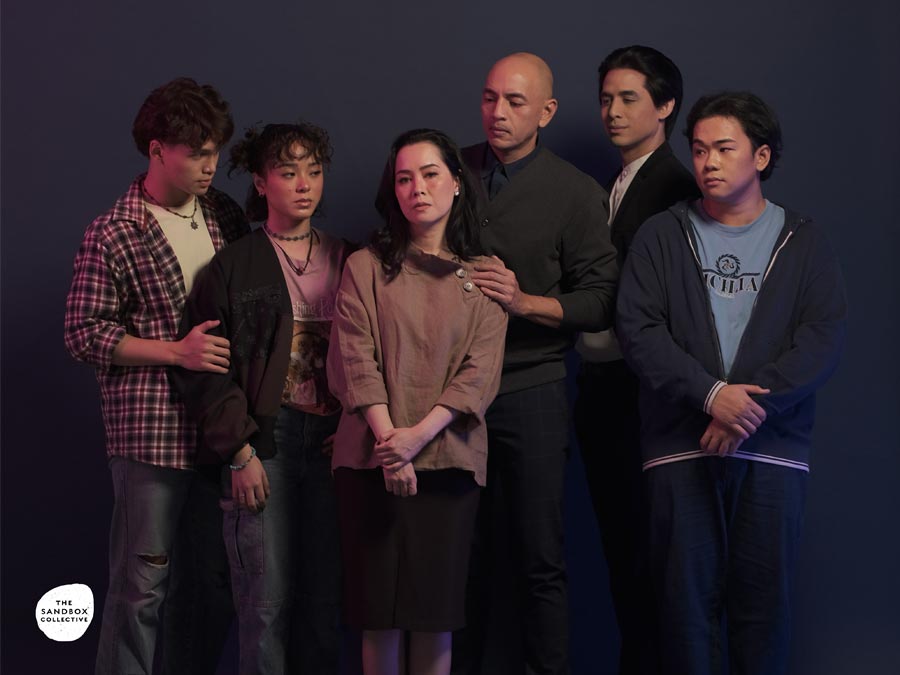
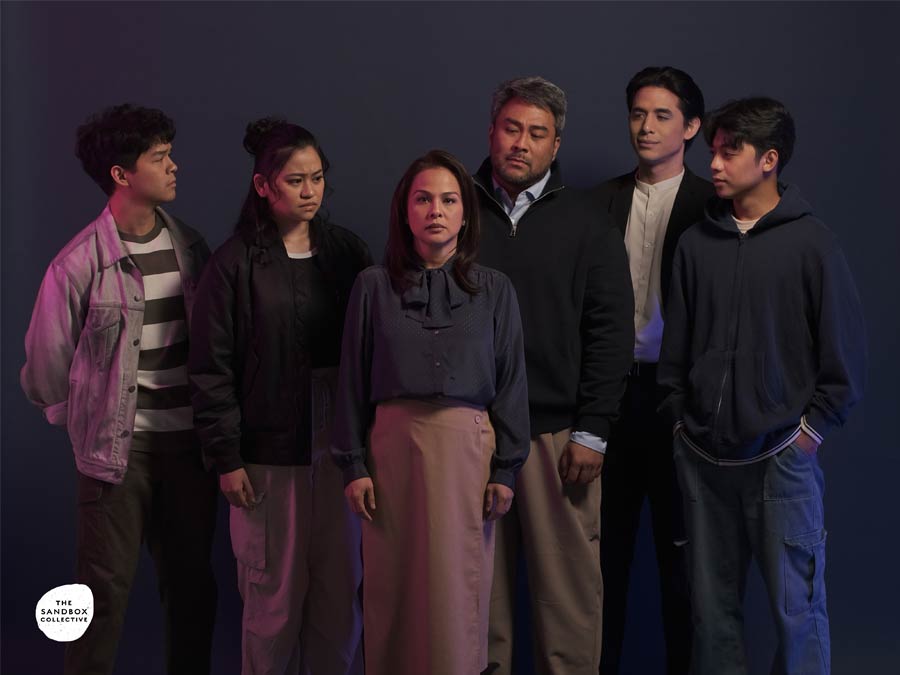
Even if Gabe’s “I’m Alive” has been on my Broadway Spotify playlist for years, I had not seen any stagings of Next To Normal (not even the 2011 version by Atlantis or the 2020 version by Ateneo Blue Repertory) until this one. Except for that one mid-Act-1 spoiler that I regret reading about online, I intentionally did not look into the full story before watching. I wanted a more organic experience.
This set is simpler than Sandbox’s grander productions in the past. An allusion to musical chairs, the characters bring their seats in and out of the stage and around the set to mark the changes between the home, school, and hospital scenes. Sadly, the venue’s notoriously buggy sound system made it difficult to understand certain songs and dialogue. I hope this gets fully resolved in the succeeding shows, lest dampen the audience’s experience of an otherwise strong play.
<
Theater veteran Shiela Valderrama brought depth and vulnerability to the character of Diana, a mother struggling to raise her family while her bipolar disorder is taking a turn for the worse. Her turbulent mental state is depicted with her constant flurry and mess around the house. This shows the audience what the mania part of manic-depression (a.k.a. bipolar disorder) is like for some people.
It was painful to watch a mother struggle with this disorder and navigate a grief so long and deep. Diana’s deadpan humor and delusions while going through therapy and her day-to-day life lets you see what it can be like for a person suffering from a smorgasbord of symptoms.

I first watched Vino Mabalot as Fonzy in last year’s Tabing Ilog. With the way he attuned to the darkness of his performance, I just knew he’d be on a roll for intense characters, and he did not disappoint as Diana’s son and anti-hero of the story, Gabe. His songs with Shiela as Diana, such as “Come With Me” and “I Am The One” brought both chills and tears.
Sheena Belarmino was a star. I missed her in Tabing Ilog and One More Chance (other actors played Trisha and Eds when I watched), so seeing her for the first time onstage as the angsty, perfectionist teen Natalie turned me into a fan. Her character represented what it’s like for a child to grow up dealing with a parent’s mental health issues, on top of the pressures of school and trying to fit in as a teenager. Her edgy aesthetic was a plus!

Natalie’s love interest and fellow musician Henry was played so charmingly by Omar Uddin (who I last saw in Tabing Ilog). His character buffered some of the more emotionally difficult scenes, both literally and figuratively lifting Natalie up from her darkest moments.
OJ Mariano as Dan, the husband and father, represents what it’s like to care for a suicidal and depressed loved one. It can be confusing and draining, and while most decisions are well-meaning, it can be to a fault, especially with the stigma and lack of information on mental health. But Dan’s character shift at the end of the play—as well as his poignant father-daughter scenes with Natalie—are what drove this writer to tears.
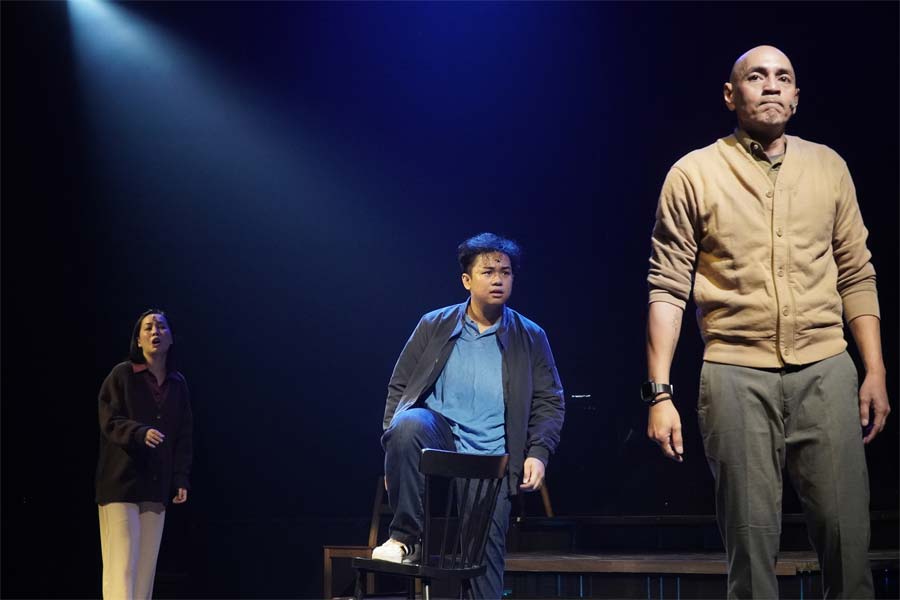
Jef Flores, who played Dan in the 2020 Ateneo Blue Rep production of Next To Normal, now plays the psychiatrists, Dr. Madden and Dr. Fine. While his characters brought a lot of comic relief in this dark play, it shows you that in the evolution of modern psychiatry, there are hits and misses, and even questionable ethics that need to be discussed.
I chuckled a little too much in “My Psychopharmacologist and I,” where Diana feels like a freak on display as she listens to Dr. Fine prescribing a litany of pills. It hit a little too close to home.

If you’re a member of the mental health community like I am, it’s easy to tell that the musical is set in the late 1990s to early 2000s, with the way this American family deals with Diana’s bipolar flare-ups, the lack of a type 1 versus type 2 bipolar diagnosis, the way the doctors interpret (or misinterpret) comorbidities that come with a main diagnosis, and the some questionable approaches to handling her disorder.
This musical shows that while mental health has come a long way since that era, we still have a long way to go, especially here in the Philippines, which is why Next To Normal needs to be shown to the 2025 audience. It lets you see mental health disorders from different perspectives—as a family member, a caregiver, and most of all, as the person going through them.


I’m holding back on the spoilers because I want Next To Normal to tug at your heartstrings at the right moment, just as I saw members of the audience choking back their tears in different scenes. Bring a pack of Kleenex and get a drink while you’re at it. I suggest, “I’m a-Lime, I’m a-Lime, I am so a-Lime” from Hendrick’s, Sandbox Co’s partner mobile bar. Yes, it’s inspired by the lyrics to “I’m Alive.”
I hope this musical helps audiences debunk many fallacies about mental health ailments: that it isn’t something you can easily snap out of; that it can happen to anyone, loving parents included; that it’s more than just mood swings; that there are many layers to person’s mental health issues; and most of all—that there is no one-size-fits-all solution to a diagnosis.

But more than the central theme of mental health, my biggest takeaway from this musical is how people go through grief (or choose not to go through it) differently. There is no set timeline or process for grieving—it’s different per person. Next To Normal does what humans often push down when dealing with grief—looking at it straight in the eye. Grief demands to be felt.
“Next To Normal” runs until February 23, 2025 at the Power Mac Center Spotlight Blackbox Theater, Circuit Makati. Purchase tickets (₱2,500-3,400 each) via Ticket2Me.
To connect with the mental health community in the Philippines, visit my Facebook page, Survivors of Suicide and Depression PH. Click here for my master list of mental health resources in the Philippines.
Discover more from Kate Was Here
Subscribe to get the latest posts sent to your email.


